Smarter Clinical Documentation: A Driver of Healthcare Transformation in GCC
March 24, 2026
5 Min Read

March 24, 2026
5 Min Read
.png)
The push to modernize healthcare throughout the GCC is moving fast. With massive initiatives like Saudi Vision 2030 and the UAE’s digital health roadmap, the region is chasing ambitious targets for quality, efficiency, and long-term sustainability.
Most of the attention goes to the national health records, AI-driven analytics, and interoperability. These are vital, of course. But there’s a basic building block that often gets ignored: the actual process of clinical documentation. Think of documentation as the bridge where medical care turns into data. It’s the record of a doctor’s reasoning and the "why" behind every treatment. But for the people on the front lines, it’s also one of the most draining, time-consuming parts of the job.
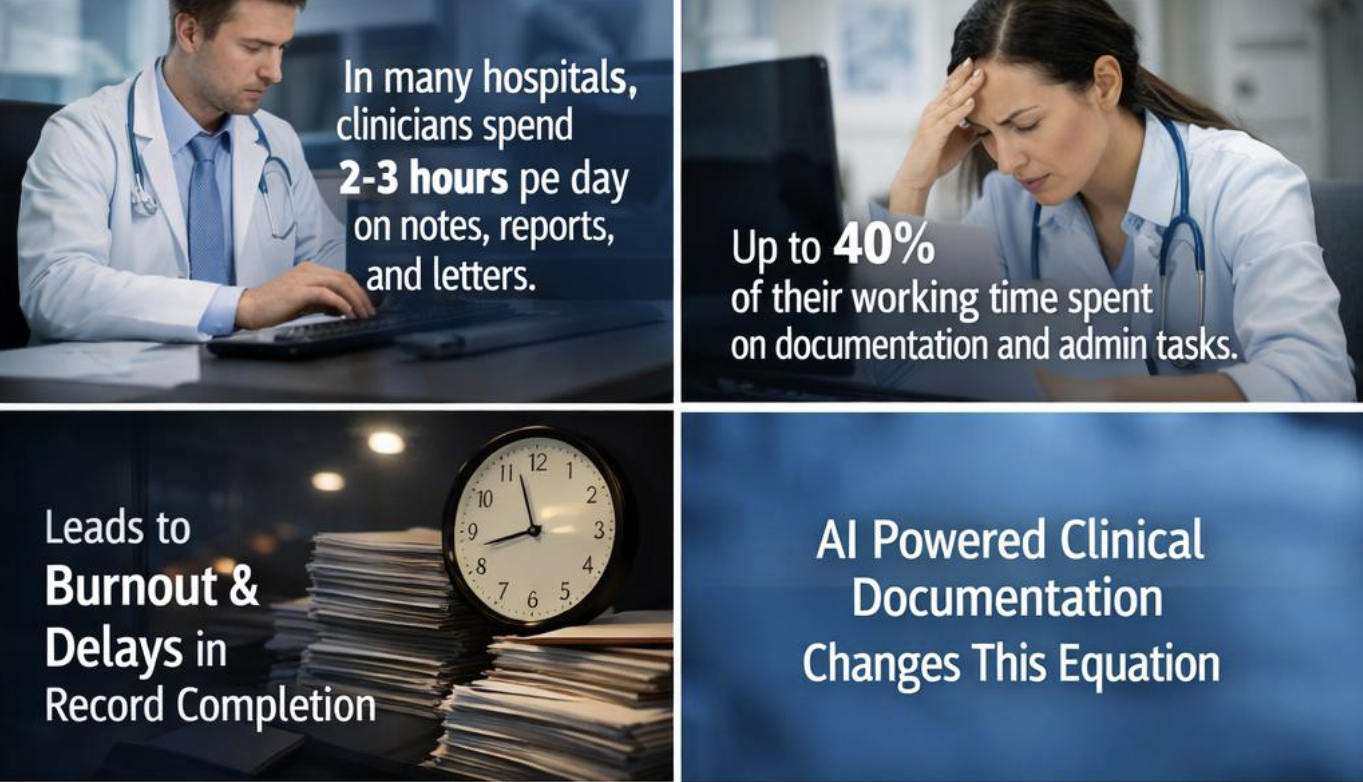
In plenty of hospitals today, clinicians are stuck writing notes and reports for 2 to 3 hours every single shift. Research keeps showing that physicians spend up to 40% of their working day on admin tasks. A lot of this work happens after hours, which is a direct path to burnout, fatigue, and delayed records.
These aren't just "business" problems. They hit patient safety, data quality, and staff retention hard. They also make it much tougher for healthcare systems to actually hit those big national transformation goals. Using AI to handle documentation isn't just a tech upgrade, it’s a massive practical shift.
With "ambient listening" tech, the system captures the conversation in real-time. The clinician can focus entirely on the patient while the notes are built automatically accurate, structured, and finished without a keyboard getting in the way.
In early rollouts, healthcare groups are seeing documentation time drop by 20–30%. Crucially, the quality of those notes stays high or even improves.
To put some real numbers on it:
For doctors, it cuts the paperwork mountain and lets them get back to why they joined the profession: caring for patients. For patients, it means a doctor who is actually looking at them, not a screen, with summaries available in both Arabic and English. And for the health systems? Better data leads to better planning and better results.
- Healthcare is moving fast right now.
- Huge GGC plans.
- This time matters.
Dr Caitriona Ryan
Director of Business Development MENA
Need answers? We have you covered.
Here are some of the most common questions we hear from healthcare teams and partners. Feel free to reach out.
.svg)

.png)


.png)